Track, Path or Park Loop: What Changes When You Share the Space?
Track, path or park loop: compare their layouts and shared-use habits to choose a running setting that suits your pace, attention and kind of outing.

You arrive at the park with a steady run in mind, but the track is busy, the path carries cyclists and dog walkers, and the grass loop bends out of sight. Choosing among a track, path or park loop changes more than scenery: each setting asks you to share space in a different way. The best fit depends on whether you want a predictable rhythm, a route with room for other users, or a run shaped by the park around you.
What does each setting ask of you?
A marked track is a defined circuit with lanes and clear direction of travel. Its repeated bends and visible markings make it easier to hold a steady pace or keep an effort contained. But a track is not private running space. Walkers, athletes doing faster repetitions, teams and physical education classes may use it at the same time, and local rules can reserve lanes or hours for particular activities.
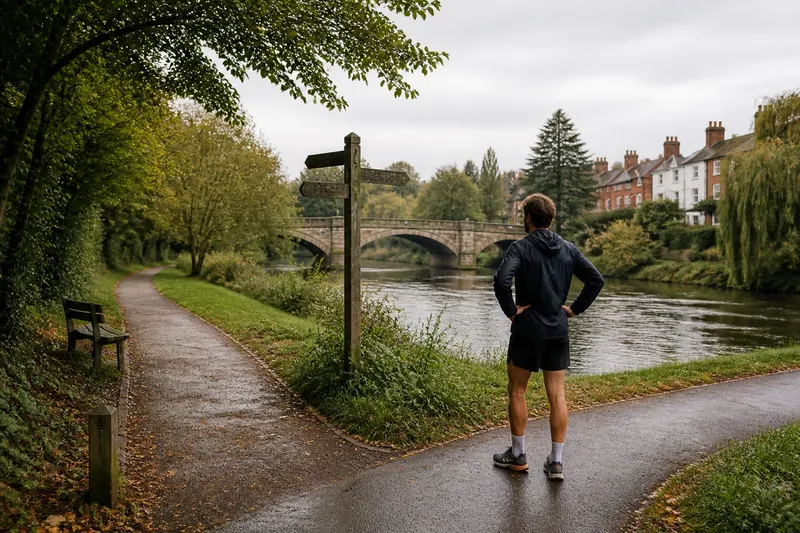
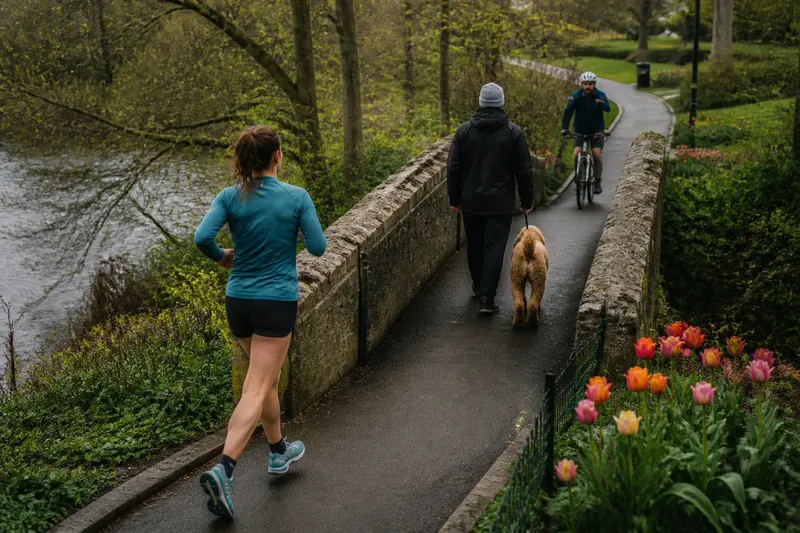
A mixed-use path is a shared corridor, often running beside water, through a greenway or between neighborhoods. It may connect useful destinations, so people use it for commuting, walking, cycling and pushing strollers as well as running. The route can feel continuous, yet junctions, narrow bridges and entrances call for more attention than a marked track usually does.
An open park loop is a circuit through park grounds, sometimes combining paved paths, grass and short connecting sections. It offers more variation in surface and surroundings, but its boundaries may be less obvious. A loop can pass playgrounds, picnic areas, sports fields or gardens, where people move in ways that are not organized around a single direction.
Choose the space whose ordinary traffic suits the kind of attention you want to spend.
How should you choose a setting for the run?
Think first about the run’s purpose. For a controlled, uninterrupted effort, a track may suit you if it is open and its use rules fit your plan. Repetition can help you notice changes in effort without having to learn a new route. The trade-off is repetition itself: the same bends and nearby activity remain in view.
A mixed-use path can suit an easy run that benefits from a sense of travel. It may carry you past a riverbank, a neighborhood edge or a wooded stretch, while requiring you to adjust pace around others. If you want to run without frequent decisions, look for a wider, more open segment at a quieter time rather than assuming every path is equally calm.
A park loop works well when you want a run to fit around other parts of a visit. You can choose a short circuit, add another pass if the space feels comfortable, or pause near a bench or water fountain. The trade-off is that park activity can change from one section to another; a quiet path may become crowded near a playground or event area.
Say you have an easy run planned and the park’s main path feels crowded near its entrance. You could choose a quieter loop that stays away from the play area, while remaining alert at crossings. The expected observable result is fewer interruptions from concentrated foot traffic, not a completely empty route.
What should you do at busy points?
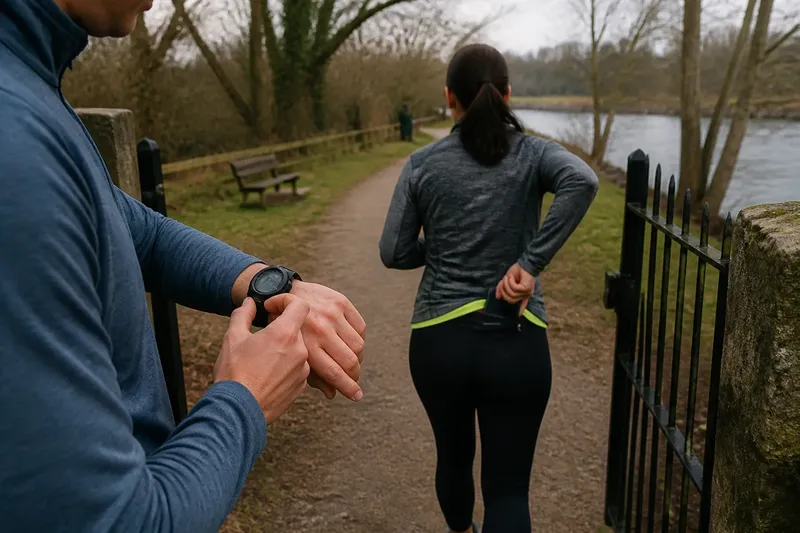
On a track, follow the posted direction and lane guidance. Leave the inside lane clear if faster runners are using it, and move out of the way before stopping to stretch or check your phone. If you are doing repeats, make space for people whose pace or session differs from yours; a lane marking does not mean that every user has the same plan.
On a mixed-use path, keep to the side indicated by local signs or customary traffic, and avoid spreading across the route. Give a clear, timely signal before passing where that is the local norm, then allow room rather than squeezing between people. Slow down near blind bends, bridges and busy entrances, where another user may not see you approaching.
On a park loop, expect people to cross the route rather than travel along it. Ease off near benches, field edges and play spaces. If the surface changes from pavement to gravel or grass, adjust your footing and pace instead of trying to preserve the same rhythm through every section.
For all three settings, make your presence legible. A brief voice cue can help when passing, but it should not replace giving people room.
Which shared-space questions matter before you go?
Can you run fast on a public track?
That depends on access rules, lane use and who else is training. Check posted signs or the facility’s public information, and choose a time and lane that do not interfere with organized use.
Should runners yield to cyclists on a mixed-use path?
Use the local signs and established traffic pattern rather than assuming every path assigns priority the same way. Leave enough room for others to pass, and avoid sudden lateral moves.
Is an open park loop suitable for a steady-paced run?
It can be, if the surface and crossing points let you maintain a comfortable rhythm. A loop with busy gathering areas may suit an easy outing better than a focused pace session.
What if the route is crowded when you arrive?
Choose a less busy section, shorten the outing, or switch to another nearby setting if one is available. It is reasonable to let the space’s current use shape your plan.
How can you build a flexible running routine?
Instead of committing every run to one surface, use a simple weekly rhythm that leaves room for local conditions. The point is not to force each setting into a training formula. It is to match the day’s intention to the space available, while keeping shared use in view.
- For a focused session: Consider the track when it is open and the lanes suit your effort. If it is occupied or restricted, use a quiet, unobstructed section of path and keep the session flexible.
- For an easy run: Try a mixed-use path at a time when crossings and traffic feel manageable. Let other users set the pace near busy sections.
- For a relaxed outing: Choose a park loop where you can enjoy changes in surface and surroundings without needing to hold a precise rhythm.
- When the usual space is busy: Switch to a quieter segment or another setting rather than competing for room. Keep the run shorter if that makes sharing easier.
Before heading out, check local access information where it is posted; facility rules and route restrictions can vary. On arrival, take a moment to notice the direction of movement, surface conditions and where people are gathering. Those details can tell you whether the setting fits the run you have in mind.
Track, path or park loop is not a ranking of better and worse places to run. Each creates a different relationship between rhythm, route and other people. When you choose a setting with its shared use in mind, the run can feel more settled—and the space remains welcoming for the next person through.