The Myth of the Perfect Running Route
The perfect running route is shaped by more than scenery. Learn how local customs, shared paths, and neighborhood rhythms influence a route’s feel.
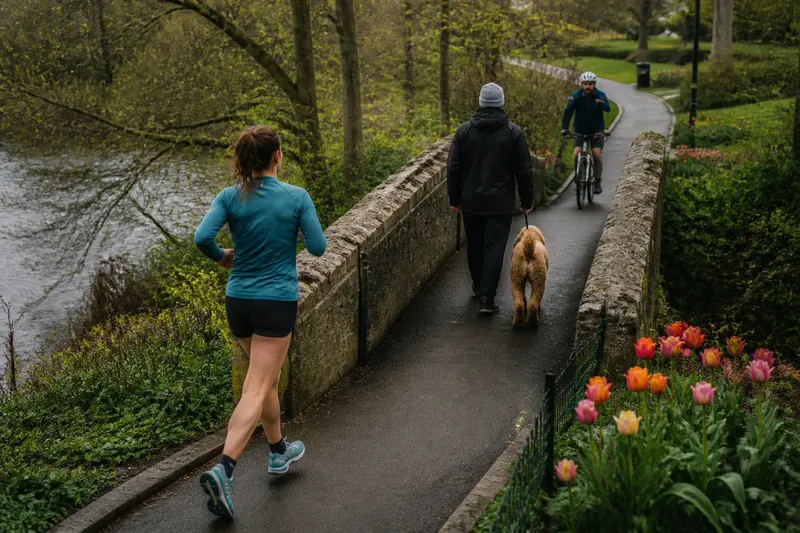
A dog walker pauses at the narrow bridge while a cyclist rings a bell behind you. The perfect running route is not only a line on a map; it is a shared place, shaped by how people use it. Its customs and rhythms can affect whether a run feels easy to inhabit.
That does not mean every runner needs to know every local rule. A few small courtesies—making space, signaling a pass, and noticing who is nearby—help the route work for more than one person at a time.
What does sharing a route ask of runners?
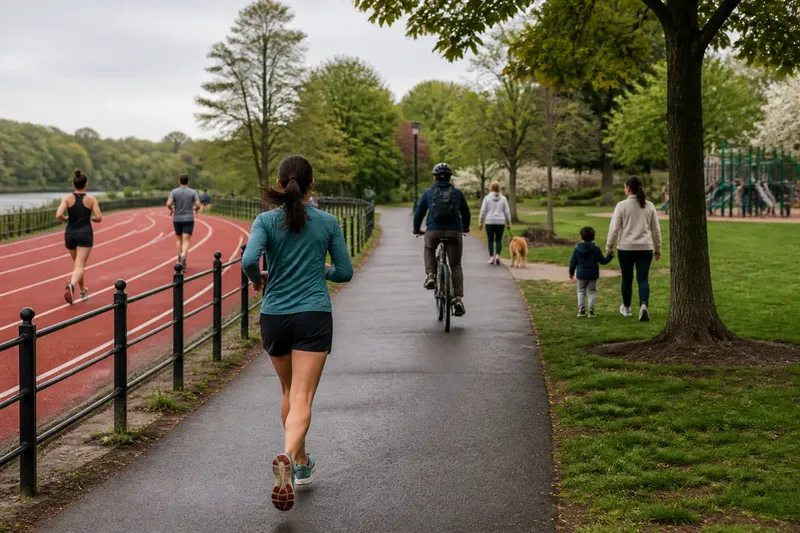
Shared paths bring together people moving at different speeds and for different reasons. Walkers may be chatting side by side. A parent may be guiding a child on a bike. Someone using a mobility aid may need the full width of a ramp or curb cut.
Running well in these places means paying attention without treating other users as obstacles. Keep enough room to pass, and avoid assuming that everyone has heard or seen you.
On a narrow stretch, patience is often the simplest way to keep the route comfortable for everyone.
How do local customs change the feel of a path?
Some routes have an informal rhythm. People may keep right, leave the center open, or slow near a busy entrance. These habits can vary by place, so watch how people move before settling into your own pattern.
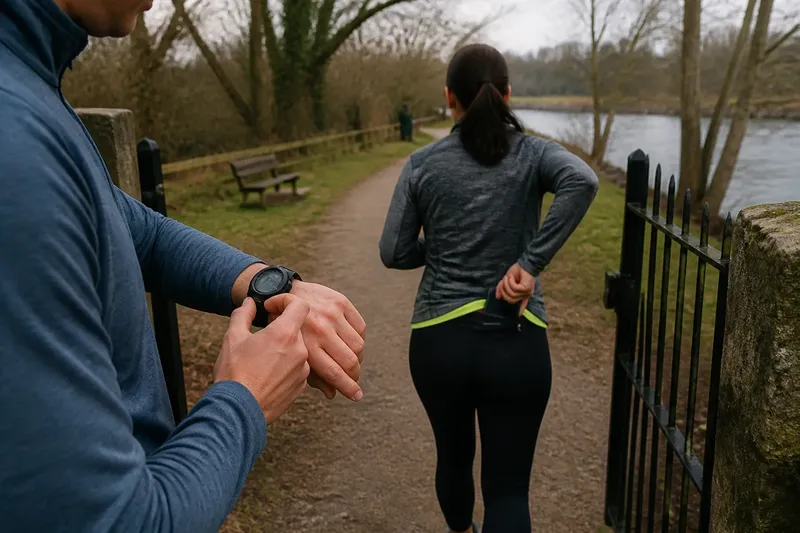
At a park gate, for instance, runners may slow because walkers are entering from both sides. Along a waterfront path, people might spread out near benches and narrow their groups when the path pinches. The useful clue is not a universal rule; it is what the setting and other users make clear.
Follow posted signs and local directions where they apply. Informal habits are no substitute for an official restriction.
What should you notice on a shared running route?
Before or during a run, these observations can help you decide how to move:
- Path width: If there is room to pass with space between you, pass calmly; if not, slow down and wait for a wider section.
- Approaching users: If someone appears not to have noticed you, make your presence clear from a respectful distance; if that could startle them, wait until you can pass without crowding.
- Groups: If a group leaves a gap, use it only when you can pass without cutting through their conversation; otherwise, wait or choose another route.
- Surface edges: If stepping aside means loose gravel, mud, or a steep verge, stay on the firm path and let the other person pass first.
- Entrances and crossings: If people are entering or crossing the path, ease your pace and leave the junction clear; if it is busy, pause until there is room.
- Signs and markings: If a sign directs runners or cyclists to a particular lane, follow it; if the instruction is unclear, use the wider, less-conflicted option and seek local guidance later.
These checks are about choosing a considerate action, not scoring a route. A path can feel welcoming even when it asks you to slow down now and then.
What questions do runners ask about shared paths?
Should runners keep to one side of a shared path?
Follow signs and local markings first. Where there are none, observe the common flow and leave room for people coming the other way.
How should I pass walkers on a narrow path?
Wait for enough space, then pass without brushing against people or forcing them toward an edge. If there is no safe-feeling opening, ease off and continue behind them.
Is it rude to run through a group?
It can feel intrusive when a group is spread across the path, especially near a narrow spot. Wait for a clear opening or use another route rather than squeezing through.
What should I do when a path is crowded?
Reduce your pace and leave more room than you would on an open stretch. If the crowd remains uncomfortable, turn onto a suitable parallel street or choose a quieter time.
How can a runner adjust without disrupting others?
Small choices can make a shared route feel less tense. Move aside only where the surface is stable, avoid sudden turns, and give people time to respond when you need to pass. At a blind corner, slow enough to see who is approaching before taking the inside line.
Imagine you start on a broad paved path where a family group is walking three abreast, then reach a narrow section beside a flower bed. Your starting conditions are a crowded path and no firm space for passing. You ease your pace, stay behind the group, and continue when the path opens into a wider plaza. The observable result is that you pass without squeezing anyone toward the flower bed; the tradeoff is a brief interruption to your rhythm.
Choose the adjustment that leaves the most room for everyone, not merely the one that keeps your pace uninterrupted.
When is a different route the better choice?
A route may be unsuitable at a particular time if its narrow sections, entrances, or busy gathering places leave little space to move comfortably. A nearby street or a different park path may offer more room. Check that signs permit your intended use and that the alternative is appropriate for your circumstances.
Changing routes is not a judgment on the people who use the original one. Shared places have different purposes, and a route that works well for a quiet walk may feel crowded during a local event.
The perfect running route is the one whose shared spaces and neighborhood customs you can move through with care. Before you set out, notice one place where you may need to slow down and decide how you will leave room for others.